
HOW DO SPIKEY BALLS MANAGE TO PERFORM THEIR MAGIC?
A popular tool for performing your own form of massage-therapy on many muscle-related conditions and are a convenient way to maximise muscle recovery for many athletes. Spikey balls work on the myofascial system to reduce muscle tension, improve blood flow, increase body awareness and aid in injury prevention and rehabilitation (making them perfect for knots and tight areas). By targeting trigger points, spikey balls can reduce pain levels and improve range of motion through specific muscles and subsequently improve joint motion. This means instead of feeling tight, you can support your bodies recovery.
There are many different exercises you can perform with the massage balls to relieve tension for both upper and lower body. In the absence of balls you can also use your hands and fingers to loosen fascia and relieve tension. Two commonly overlooked areas in self-massage—the ribs and feet—often feel tender initially but deliver noticeable gains in suppleness, movement quality, breathing mechanics, and even running efficiency
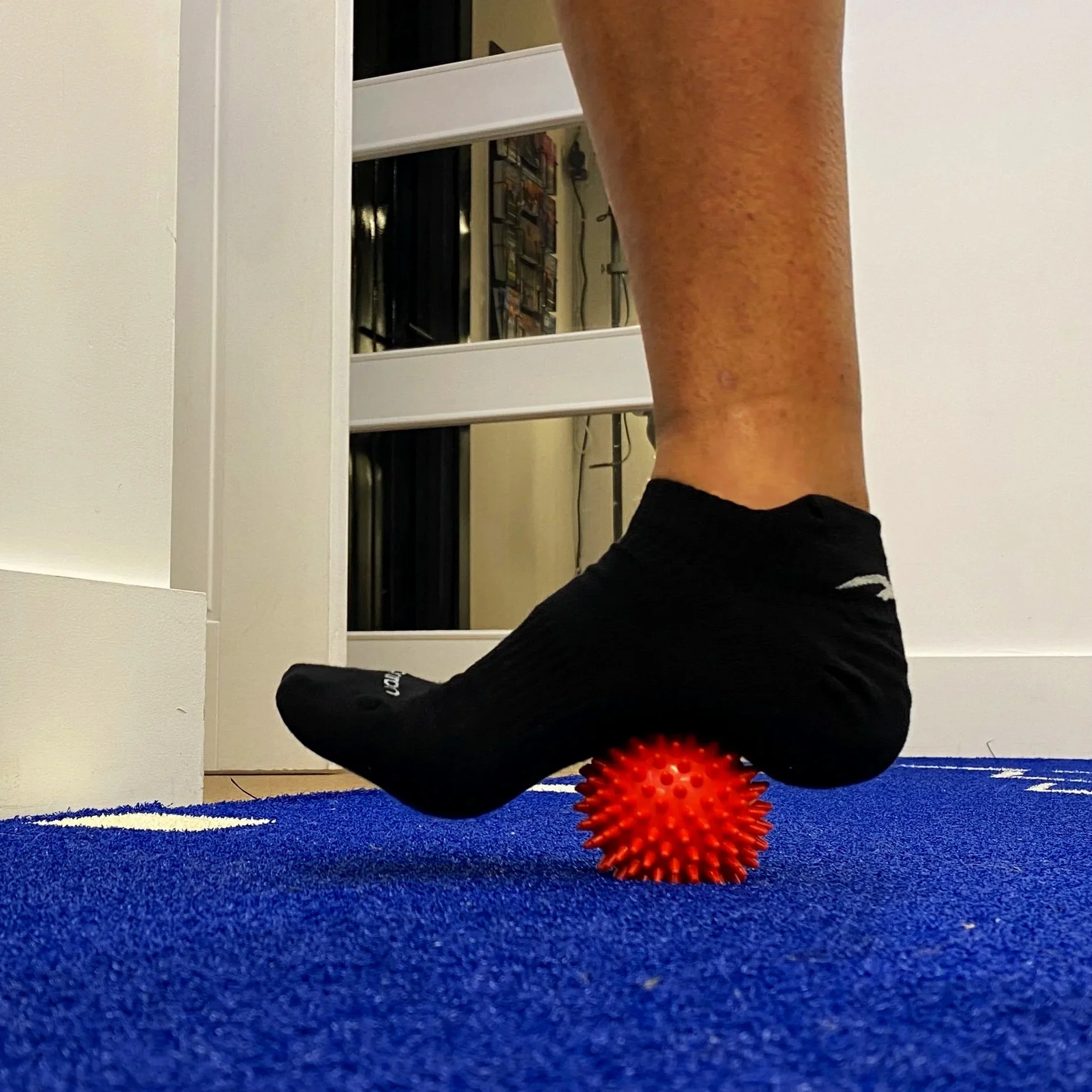
Feet
Stand near a wall so you can offload weight through your hands as needed.
Place the ball under the centre of your arch, not directly on the heel bone or toe tips.
Keep knee soft, hips stacked over the foot, and avoid gripping the floor with your toes so the plantar fascia can relax.
Roll slowly from just in front of the heel pad to just behind the toes, covering the whole length of the arch, not just the middle. Move at a controlled pace.
Keep the toes relaxed and let the arch gently “melt” over the ball rather than pushing harder.
Experiment with tipping your toes forward and heel backwards while maintaining weight on the ball.
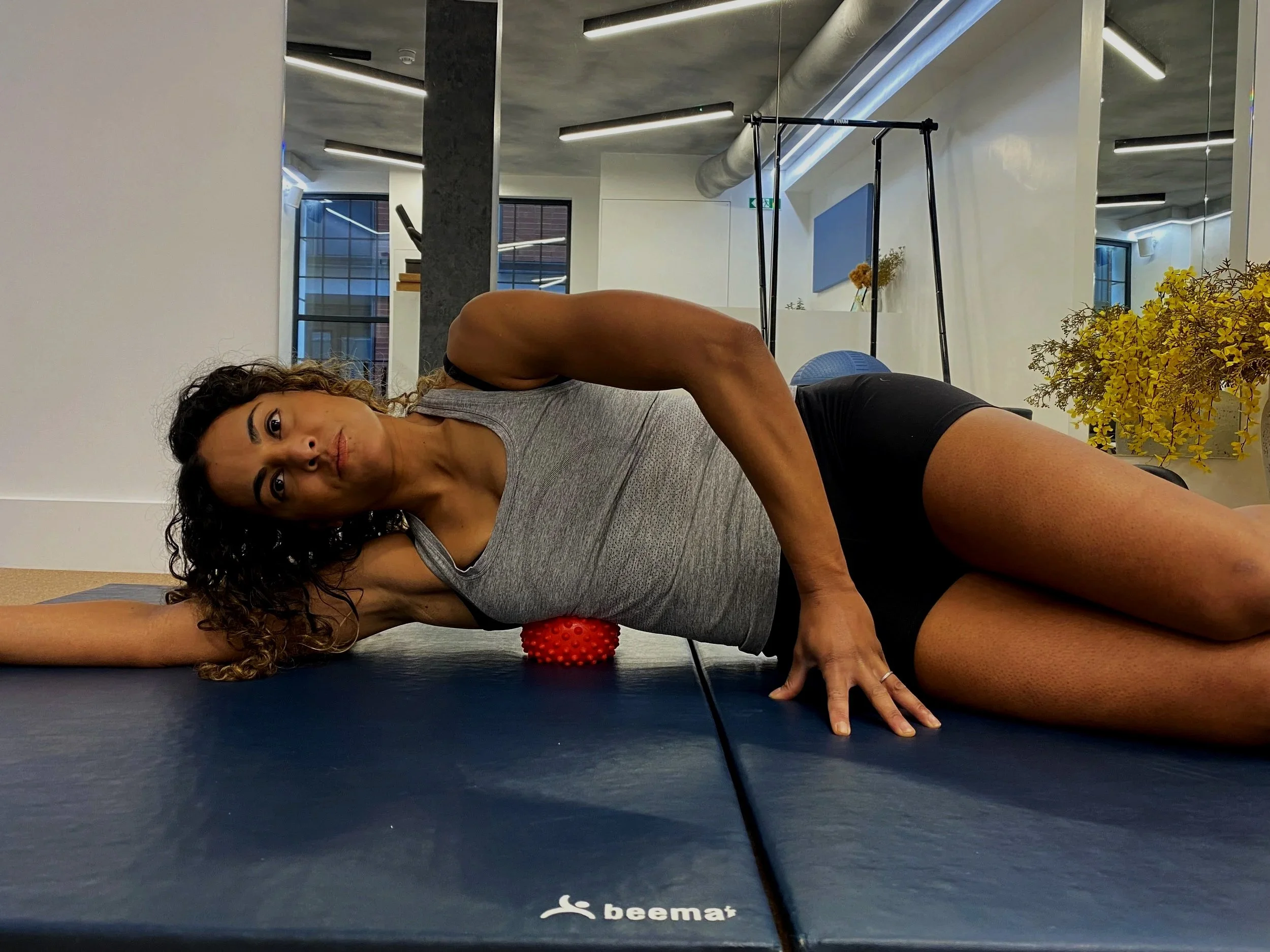
Ribs
Position yourself on your side on a firm surface like a yoga mat, with knees slightly bent for stability.
Place the ball (start with a softer ball) directly under the lower ribs or serratus area (fan-shaped muscle along the side of your ribcage), avoiding direct pressure on bone.
Extend the top arm long overhead, palm up, to depress the shoulder and maximise space between ribs.
Rock slowly side-to-side (back and forth) along the rib margins. Shift up and down from mid-ribs toward the bottom edge, pausing on tender spaces for 10-20 seconds. Keep movements small and controlled.
General tips:
Start with light pressure and increase as needed.
Spend 10-30 seconds on each spot and gradually increase time as you get used to the exercises.
Breathe deeply and relax the muscles you're working on.
Avoid rolling directly on bones or joints.
