
Stability: the Key to Better Running
Runners often focus on mileage, speed, or the perfect shoe but the real secret to stronger, more efficient running lies in stability. Before you take another stride, your body has to control it. That control, or stability, is what keeps every step smooth, joints safe, and power moving in the right direction.
Think of stability as your body’s internal shock absorber. Each time your foot hits the ground, your core, hips, and glutes work behind the scenes to keep you steady. When these stabilisers fatigue or underperform, your running form collapses, stride length shortens, posture tilts, and compensations creep in. Over time, that’s the fast track to tight hips, cranky knees, and sore lower backs.
So how do you train it? Training stability isn’t about holding a plank for hours but about connecting your body’s moving parts so every stride feels efficient and supported. Try these three lower body stability exercises below to help with your running form and strength.
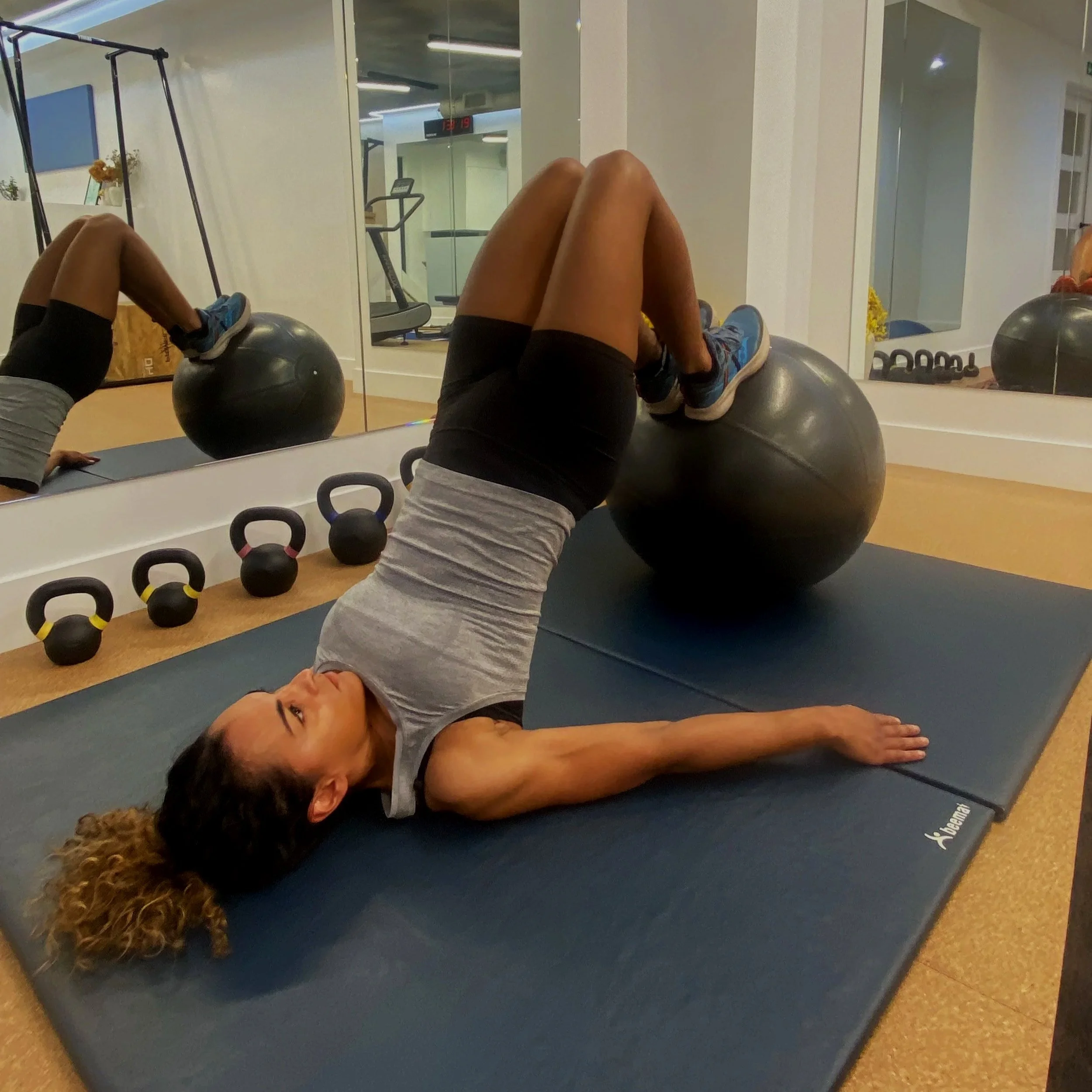
Swiss Ball Hamstring Curls
Teach your posterior chain (the group of muscles running along the back of your body, from your neck and skull down to your heels, encompassing your traps, lats, spinal erectors, glutes, hamstrings, and calves) to coordinate under tension. This is exactly what happens every time you push off during a stride.
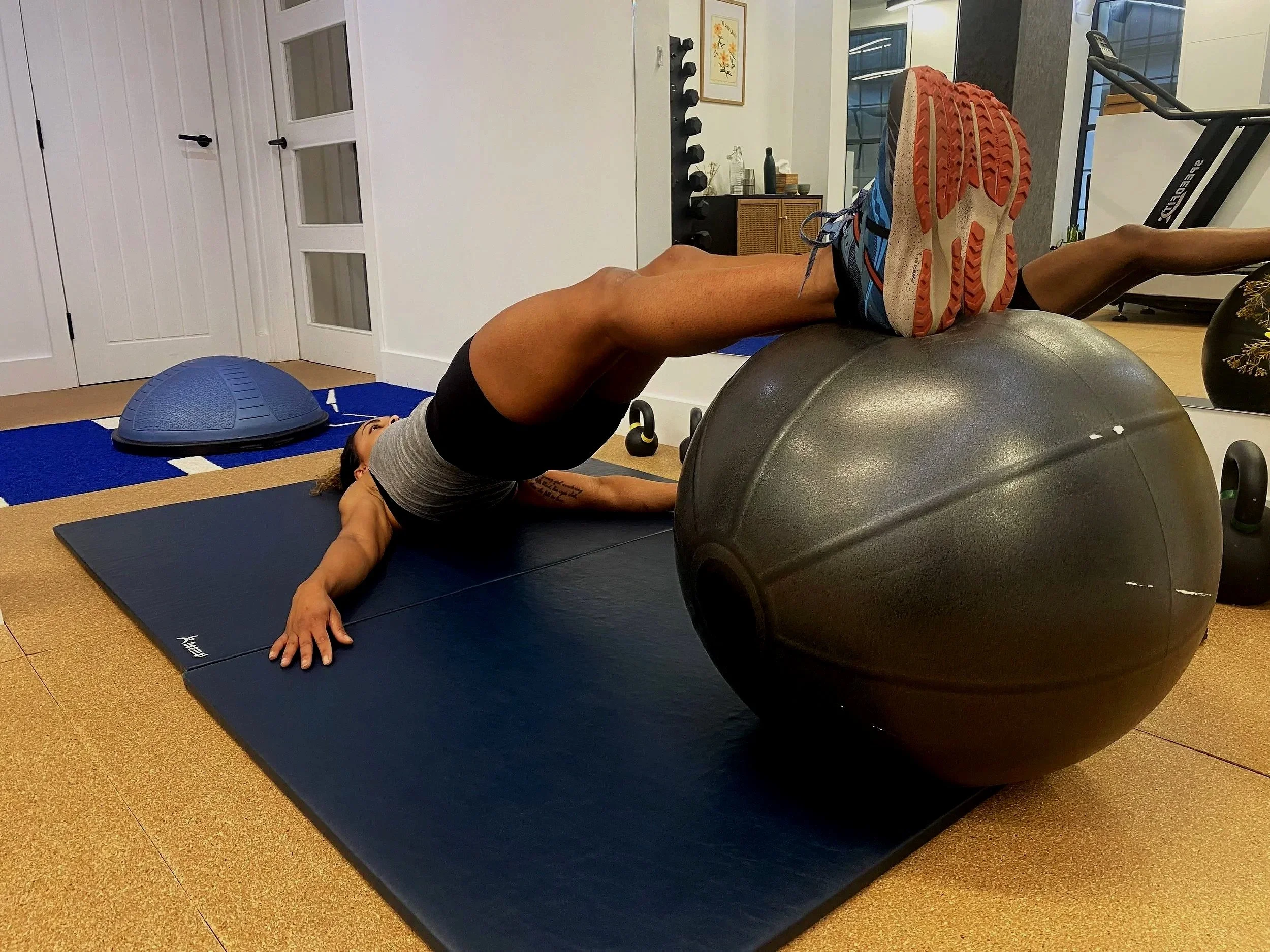
Swiss Ball Glute Bridges
This enhances stability by introducing an unstable surface that demands constant micro-adjustments. The force deepens engagement of the glutes (key pelvic stabiliser while running). The unstable surface also recruits smaller stabiliser muscles around the hips and spine that are often underutilised in standard bridges. As a result, runners build better neuromuscular control and resilience.
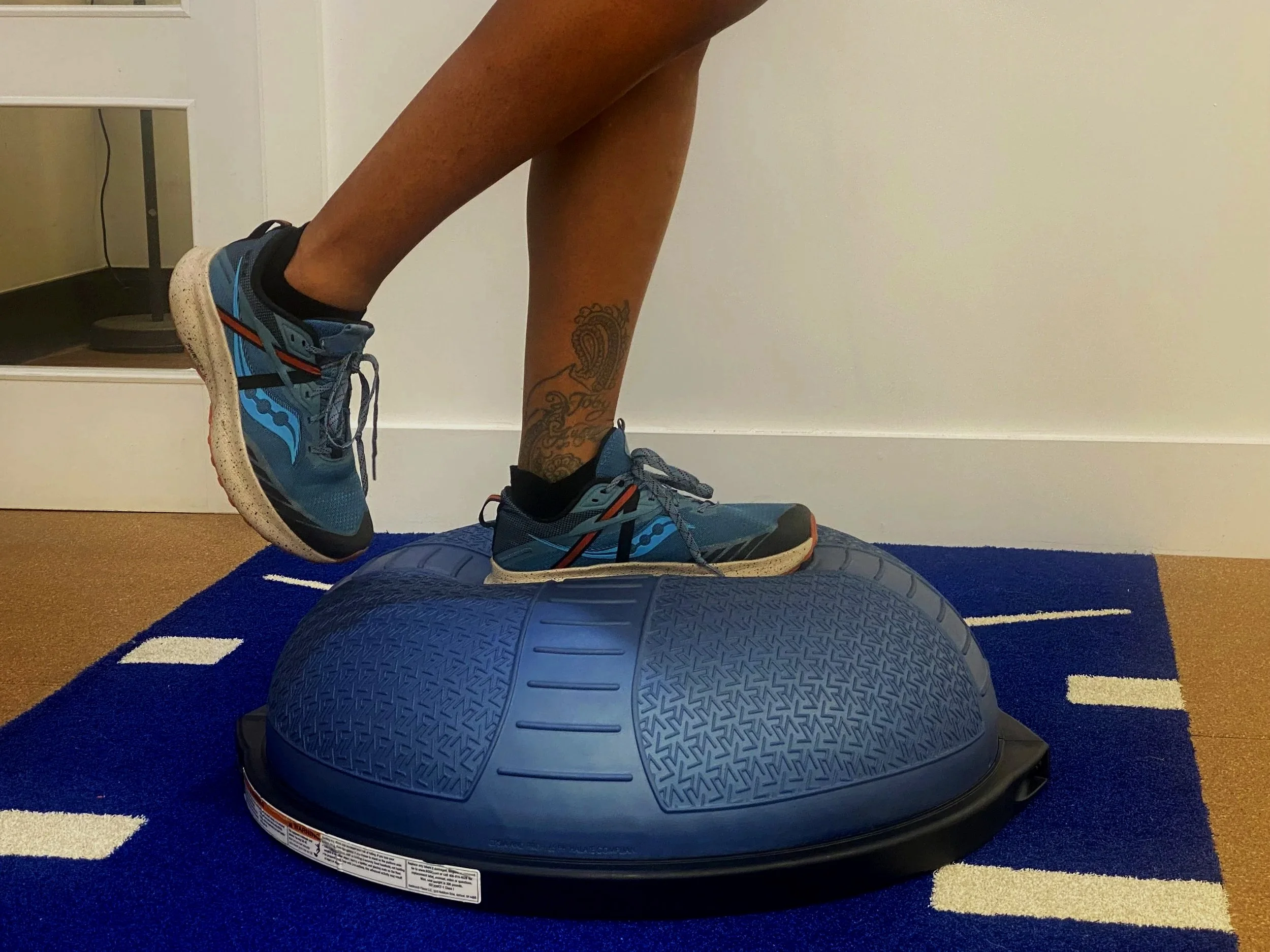
One-leg Bosu stand
Standing on the dome side of a Bosu ball trains ankle stability by building proprioception and control. The foot, ankle and lower leg muscles are forced to fire dynamically with every tiny shift. The result is runners will gain stronger, more responsive ankles that are less prone to fatigue and can handle uneven ground.
